


Animal health
Small proteins directed at parasites and pathogens relevant to animal production, offering an alternative to resistance-prone solutions.
Biotechnology for animal health
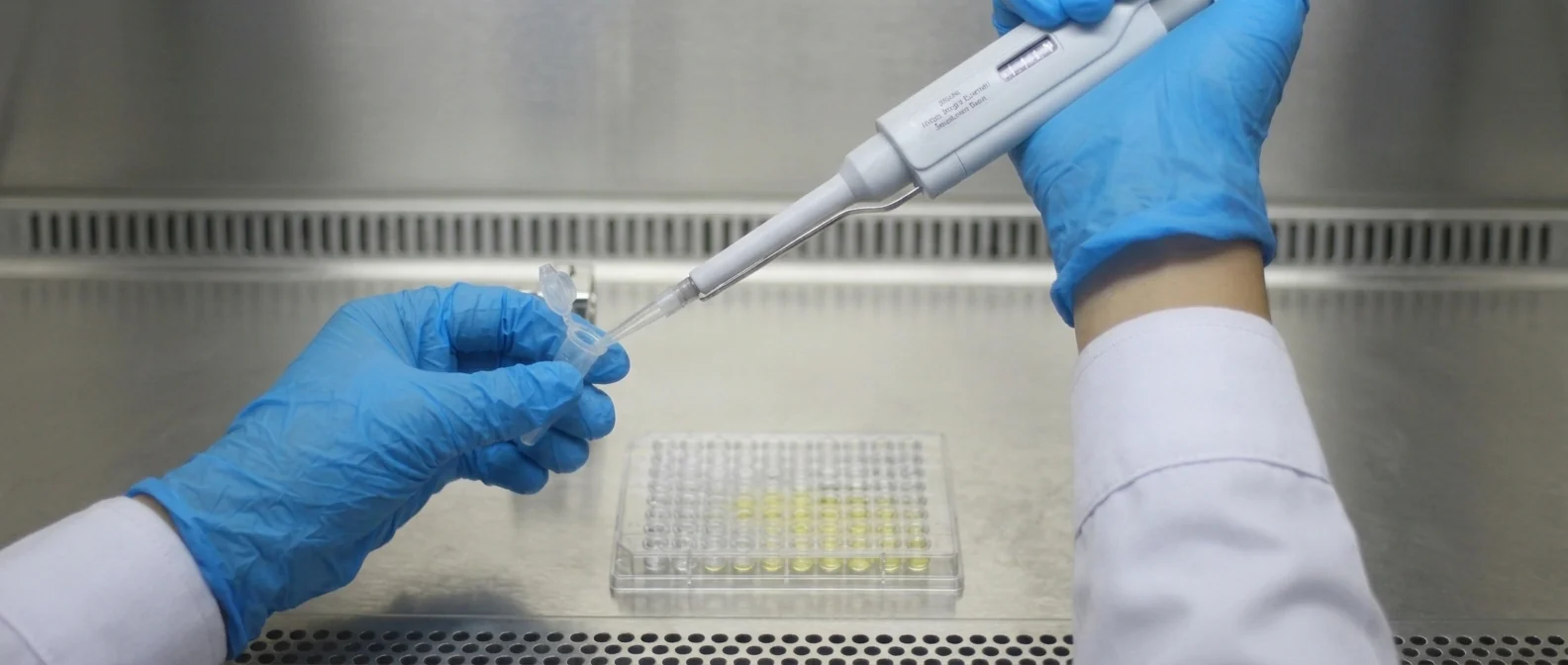
Knotide Bio designs, develops and advances highly stable bioactive small proteins for animal health, nutrition and welfare. To do so, we combine computational design, experimental discovery and cost-efficient production through precision fermentation, always with the species that anchor global food production in mind: aquaculture, poultry, swine, ruminants and pets.
Starting point
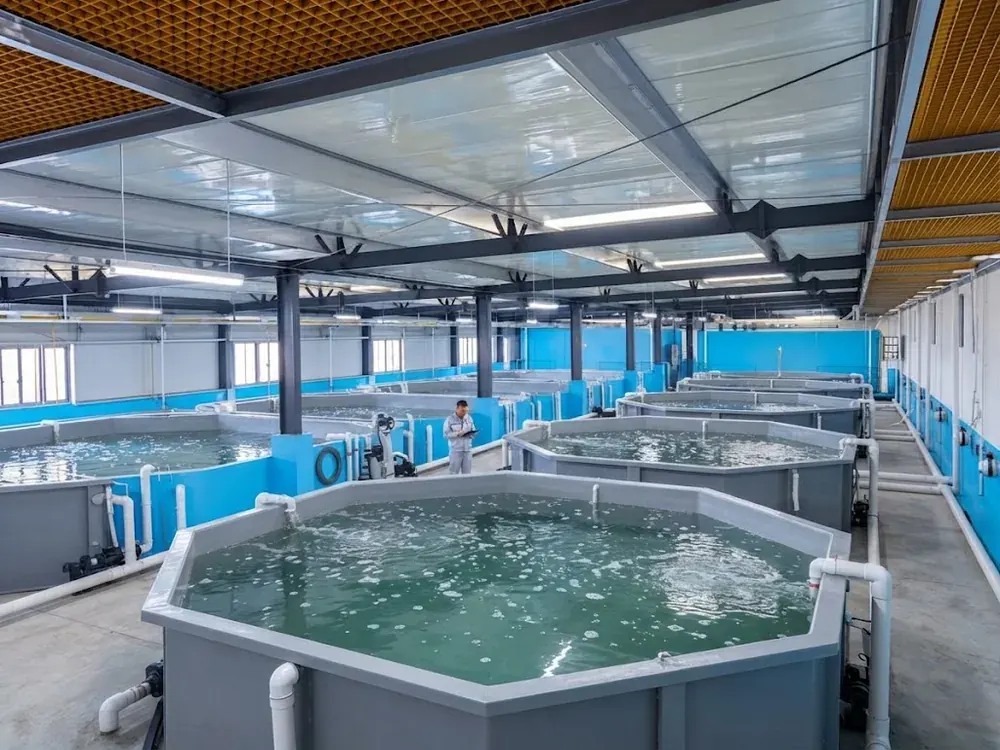
Shrimp and salmon aquaculture face pathogens for which the available solutions are becoming increasingly ineffective, costly or prone to resistance. Vibrio parahaemolyticus, the causative agent of AHPND (Acute Hepatopancreatic Necrosis Disease), can collapse an entire shrimp pond within 30 days of stocking, and there is still no dominant biotechnological alternative to antibiotics. Sea lice (Lepeophtheirus salmonis and Caligus rogercresseyi), which affect salmon aquaculture, pose a comparable challenge and are the platform's next application.
This is where Knotide Bio starts. Our aim is to show, on a real and measurable problem, how a well-engineered biomolecule can replace approaches that have been worn down by resistance and regulatory rejection.
The problem in numbers
$43billion
Estimated cumulative losses in the shrimp industry affected by AHPND, across Asia and Mexico.
Mass mortality within weeks
Clinical signs and mortality can start as early as day 10 after stocking; mass mortality, up to 100%, usually occurs within 30-35 days of stocking.
EU sales of antimicrobials for farmed animals and aquaculture (2018 = 100)
Sources: Kumar et al. (2021), Toxins 13:524 · WOAH, Manual of Diagnostic Tests for Aquatic Animals, AHPND chapter · European Environment Agency, Farm to Fork strategy
Platform
Knotide Bio explores families of bioactive small proteins as the starting point for designing biotechnological solutions aimed at specific targets in animal health.
Bioprospecting and selection of bioactive proteins with potential activity against identified targets.
Study of the structure, function and mechanism of action of the selected proteins.
Laboratory assays and analyses that confirm activity, selectivity and safety.
Formulation and integration of the validated bioactive proteins into solutions for animal health, nutrition and welfare.
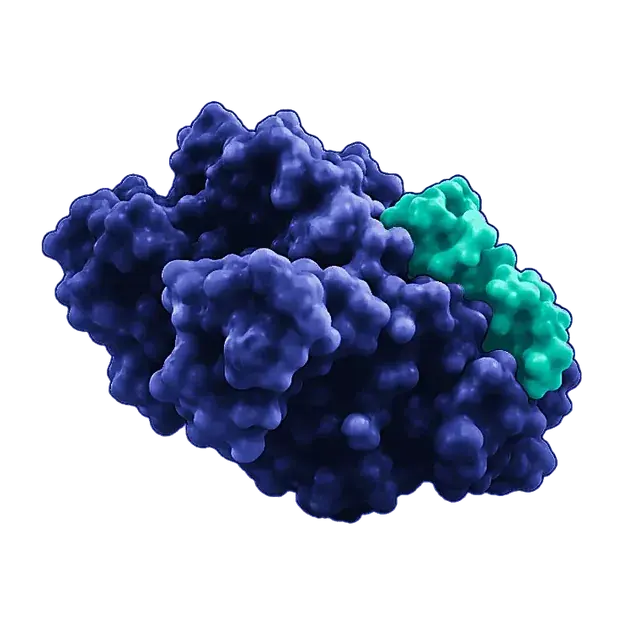
Knotide Bio combines AI-guided molecular design with proprietary discovery libraries to develop small, highly stable bioactive proteins. These complementary technologies can be used on their own or together, which makes the discovery, engineering and optimisation of molecules tailored to specific biological applications more efficient.
Our bioactive proteins are designed not only for biological performance but also for efficient production through precision fermentation.
This manufacturing approach is intended to enable scalable, consistent and cost-effective production and, in turn, to support applications where price is critical, such as aquaculture and livestock health.

Applications
Small proteins directed at parasites and pathogens relevant to animal production, offering an alternative to resistance-prone solutions.
Bioactive proteins applied in nutritional solutions that support animal performance and gut health.
Solutions that reduce the need for intensive handling and treatment, with a direct benefit for animal welfare.
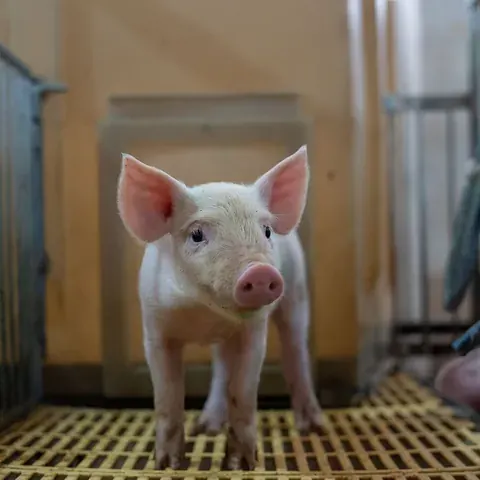
Species the platform is built to serve
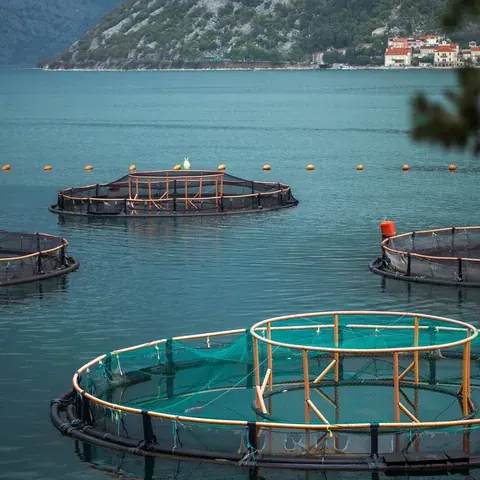



In our lead application, a Knotide Bio protein is designed to neutralise the toxin that a pathogen needs to damage its host, instead of relying on broad antimicrobial activity. We are extending this approach to other pathogens, targets and species within the platform.
Knotide Bio's first application case is AHPND in shrimp aquaculture, chosen for its regulatory urgency, its market size and a well-characterised molecular target. Sea lice in salmon aquaculture is the platform's second application, and it shares the same core mechanism and the administration routes already used by the industry.
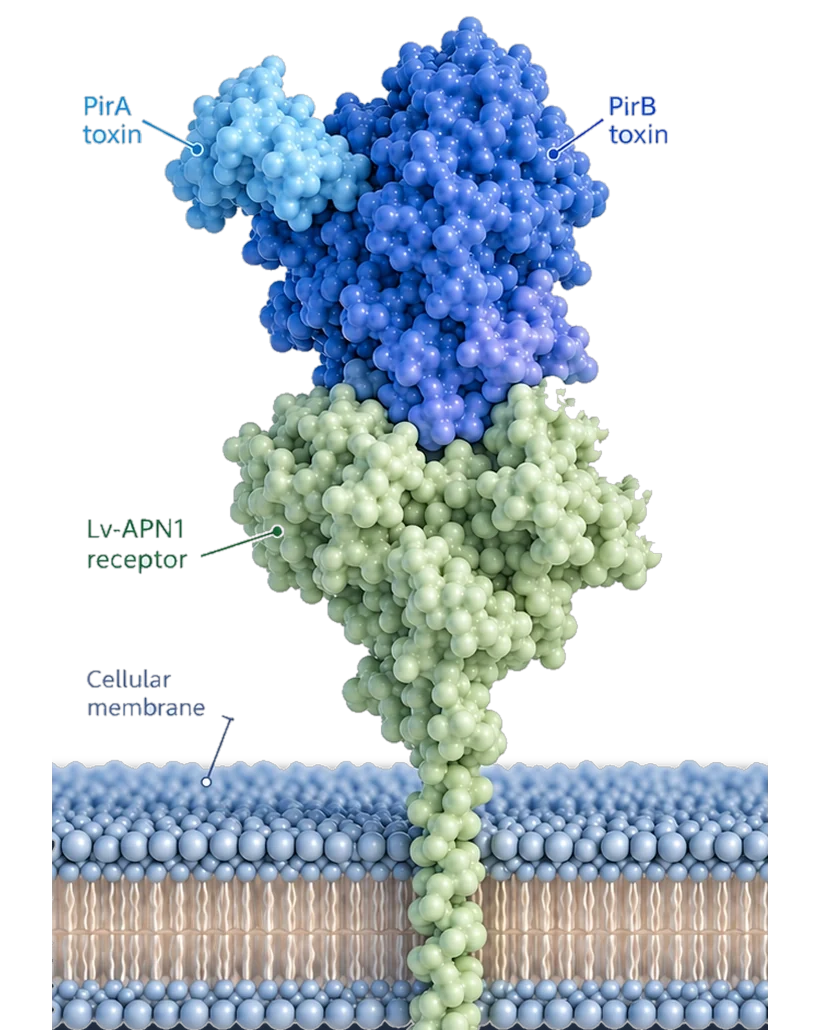
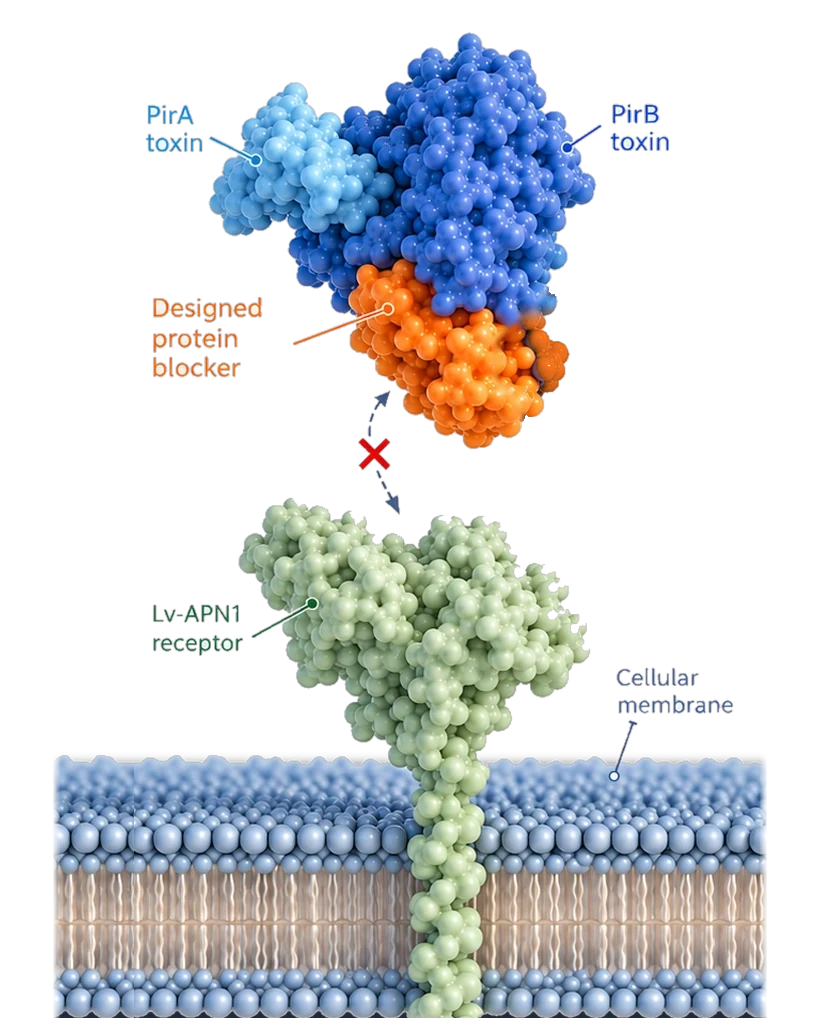
A. PirAB binds the Lv-APN1 receptorB. The designed protein blocker prevents receptor binding
Drag to compare
Mechanism of action: the designed protein blocker prevents the toxin complex from binding the cell-surface receptor.
Biosensing
The same bioactive small proteins engineered to recognise specific biological targets, such as toxins, bacteria, enzymes, fungi and viruses, can also act as the molecular recognition element in biosensing and rapid-detection formats.
Designed proteins that bind a defined target with high selectivity, serving as the sensing element in detection assays.
Highly stable proteins suited to the demanding conditions of field and production environments.
A foundation for fast, protein-based detection of pathogens and biomarkers relevant to animal production.
An exploratory direction of the Knotide Bio platform, which we are advancing with the same scientific rigour as our animal-health programmes.
Services
Knotide Bio's activity is not limited to developing its own platform. The company also provides specialised services to other biotechnology and life sciences organisations.
Research, development and commercialisation of biotechnology-based biomolecules, namely bioactive proteins.
Production of biomolecules, either directly or through subcontracting, depending on project stage and scale.
Scientific, technical and technological consultancy in biotechnology and life sciences for third-party organisations.
Technical and laboratory assays, analyses and validations for the characterisation, development and quality control of biomolecules and biotechnology products.
Team
Knotide Bio was founded by three scientists with complementary academic and industry backgrounds in molecular biology, biochemical engineering and biotechnology.
Our expertise
Knotide Bio brings together a multidisciplinary founding team whose expertise spans molecular microbiology, biomolecule engineering, biochemical engineering and industrial innovation. The team has experience across the full R&D pathway, from scientific concept and early discovery through development and validation, all the way to industrial implementation.
Together, the founders have led and managed R&D programmes across national and European funding instruments, including FCT, Horizon Europe and COMPETE2020/2030. They also bring direct experience in translating research into industrial innovation and commercial outcomes.
The founding team maintains strong links with academic and research institutions, including the Universities of Porto, Coimbra and Algarve and their research and innovation ecosystems, as well as collaborations with international academic and industrial organisations. At Knotide Bio, these complementary capabilities converge on a common objective: to engineer and develop bioactive molecules with the potential to deliver next-generation solutions for disease prevention and treatment.
Funding and partnerships
Knotide Bio is structured to compete for public research and innovation funding and is currently seeking support through programmes such as Portugal 2030, COMPETE, MAR2030 and Horizon Europe. We therefore welcome academic groups, industry players and consortium partners interested in joint applications and co-funded research.
Calls of interest
Calls Knotide Bio is interested in taking part in. If your organisation is also looking at any of these calls, get in touch: we are looking for partners to build strong consortia.
Propose a partnershipContact
Researchers, animal production companies and prospective partners are welcome to get in touch, whether to explore a collaboration, a licensing opportunity or Knotide Bio's laboratory services.
The map is provided by Google Maps and only loads if you choose to display it. Google may then set its own cookies.
Open in Google MapsHello. I'm the Knotide Bio assistant and I answer general questions about the company, our projects and how to work with us. Pick a question or type your own.
Automatic answers based only on the information on this website. For specific questions, please talk to the team.